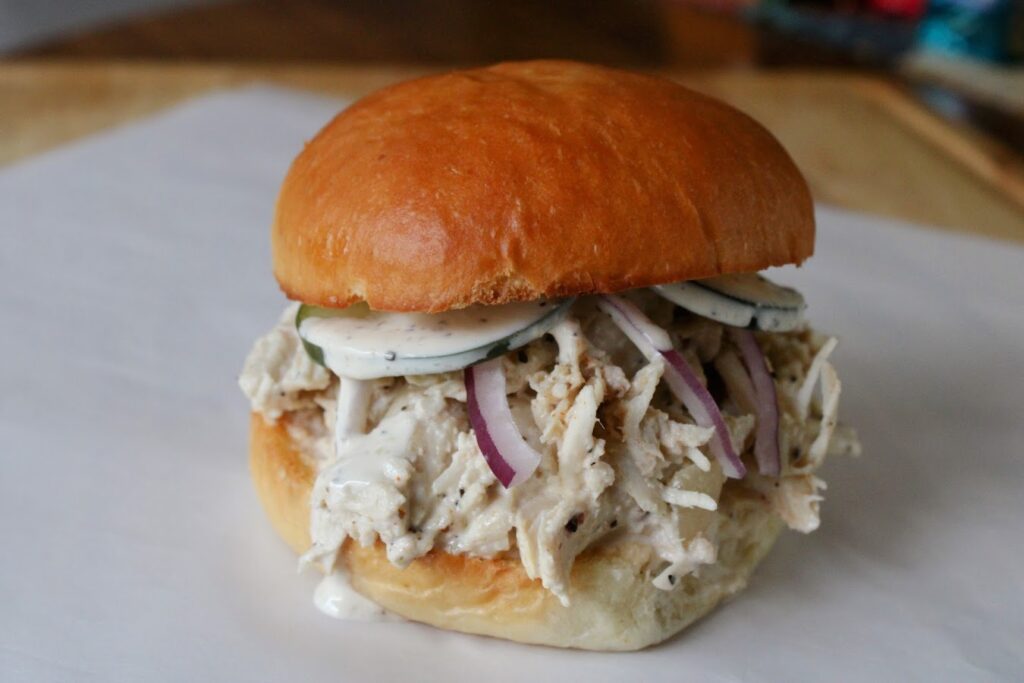
This week, I’m sharing an easy slow cooker pulled chicken recipe that we’ll be dousing with a zippy and creamy barbecue sauce that might not be quite as brown as you’re imagining (we’re ignoring that you can look at the photo). This is not a barbecued chicken sandwich, but it’s super tasty and has a twist that leads it to be reminiscent of a grilled or barbecued chicken sandwich that you might find in a faraway place called Northern Alabama.
What is this sandwich?
Firstly, this sandwich has very little to do with the state of Alabama.
This is a pulled chicken sandwich that’s topped with Alabama white barbecue sauce, slivers of crunchy raw red onion, homemade, extra savory MSG pickles, and tucked inside a toasted but still very soft potato bun that we made ourselves. You can melt some cheddar cheese on the bun, too, if you want. I did for a few of my test sandwiches.
This sandwich is not meant to be a replacement or copycat of any sandwich that I know of that’s sold in Alabama. The chicken you’d find in an Alabama barbecue restaurant would be cooked or smoked on the bone, low and slow over hickory wood, and the chicken in my sandwich is a slow cooker or crockpot recipe I developed with the intention of making an easy pulled chicken recipe from breast meat that didn’t dry out during the cooking process. You can also skip my crockpot chicken process entirely by using the meat from a rotisserie chicken if you want to sidestep and save yourself a bit of effort.
What is Alabama white barbecue sauce?
I’ve written about chicken and Alabama white barbecue sauce twice before. The first time was when I created a grilled chicken thigh and fried green tomato sandwich, and then again when I created an at-home version of a Costco chicken bake. This sandwich is quite different from both of those, but the vinegary flavors from the Alabama white barbecue sauce unite all three.
Alabama white sauce or Alabama barbecue sauce was likely invented by Bob Gibson in Decatur, AL, as far back as 1925. The man, Bob Gibson, is no longer around, but the restaurant he founded, Big Bob Gibson’s Bar-B-Q, and the company he started still exist and sell and serve his version of the sauce today. You can also find Big Bob Gibson Original White Sauce online if you are interested and you have 15+ dollars.
Big Bob Gibson’s sauce is white because the main ingredient is mayonnaise. Yes, I said it’s barbecue sauce made from mayonnaise, which is mixed with large amounts of vinegar and black pepper. Along with those two components, there’s typically lemon juice, horseradish, and maybe a little cayenne pepper powder to give the sauce a kick with some depth of flavor. The vinegar and lemon juice give the sauce a bit of tartness that balances the sauce with all of the creamy mayo and pepper very well, and the prepared horseradish introduces a slight pungency that brings everything together cohesively.

Early in the 2000s, Big Bob Gibson’s Bar-B-Q released a 15-minute video detailing the history and origin of Alabama barbecue and the influence that Bob Gibson had on it, which is worth a watch if you’re interested in learning more.
Can a mayo-based barbecue sauce be good?
Easy answer: yes.
I really didn’t try Alabama white sauce until about 15 years ago or so, and before I tried it, I really couldn’t wrap my head around a mayonnaise-based barbecue sauce, but after having it on some chicken wings at a now shuttered restaurant called Lillie’s Q near my house here in Chicago, something clicked in my brain, and I could see how well it works with chicken. If you’re used to putting mayonnaise in your chicken sandwich mix, or if you’re a fan of most mayo-based chicken salads, you already know that the combination really does work together, and the introduction of all the vinegar and pepper turns this into a great complementary sauce.
Lillie’s Q, which I mentioned in the paragraph above as the place where I tried white barbecue sauce first, is no longer running a restaurant, but they still sell barbecue sauces, including Lillie’s Q Ivory Barbeque Sauce, in their online store (unfortunately, Ivory is currently listed as out of stock). You can also find some Lillie’s Q sauces at chains like Kroger, Meijer, The Fresh Market, and on Amazon.
Now that we’ve got all that mayonnaise business out of the way, I want to reiterate that this isn’t a barbecue sandwich, and I’ve only visited Alabama once when I was a teenager. So I definitely will not be calling this anything close to a traditional sandwich, but it’s very tasty, and because of that, I have shared some tactics and tips for how to make your own version.
Now that we know what sandwich we’re making, we’ll need to whip up some soft buns.
Super soft potato buns
This sandwich blog post marks the 21st time I have written about sandwiches that are made with this very well-tested burger and sandwich bun recipe. It’s easily my favorite recipe for making soft buns for burgers or things like a fried or grilled chicken sandwich.
This is a yeasted dough recipe that calls for two slightly special ingredients that you might not have in your pantry right now. The first is where the name of the recipe comes from, which is potato flour, and the second is dry milk or powdered milk. Both of these ingredients should be in your grocery store if you live in the United States, or you can easily order them online.

Recently, someone online asked me if they could use instant mashed potatoes instead of potato flour because they couldn’t find potato flour in their country. I had heard of people using instant mashed potatoes, but I had never done so myself. A little bit of research and digging into ingredient lists shows that they’re pretty much the same thing. If you do end up buying instant potato flakes or instant mashed potatoes, just make sure that they are unflavored if possible.
What’s the difference between potato flour and potato starch?
Potato flour is not the same thing as potato starch. Potato starch is often used for thickening soups, or it’s occasionally used in frying to help create an extra crispy crust. Potato flour is made by cooking, drying, and pulverizing whole potatoes, while potato starch is simply the starch that is extracted from potatoes through a washing process. So, potato flour does contain starch, but it also contains the proteins and fiber that are normally in potatoes, while potato starch does not.
Starch is a good thing in a bread roll recipe because it soaks up and absorbs liquid, which helps to keep the finished, baked bread moist. Bread that retains moisture will have a longer shelf life because it dries out more slowly and stays fresher longer. This means that you could use potato starch or even corn starch to achieve some of what potato flour does in a bread recipe, but starch alone will not bring any of the other components, like flavor and color, that potato flour contributes.
The ingredient that is most interchangeable with potato flour is instant mashed potatoes. These two ingredients are effectively the same thing at a different level of grind. Potato flour is processed much finer and more ground down than instant mashed potatoes, but both ingredients should be able to be substituted in a 1-to-1 ratio by weight.
King Arthur Baking wrote a long blog post about substituting ingredients for potato flour that’s well worth a read if you’re interested. They tested corn starch, mashed potatoes, and all-purpose flour as 1:1 replacements for potato flour to see what would happen.
Dry milk powder
Dry milk, or powdered milk, or milk powder, is the other ingredient that you might or might not have in your pantry. This ingredient is what it says on the label: it is milk that has been dried, causing the liquid to evaporate, and what is left is turned into powder. One big plus side to this drying process is that dried milk powder has a long shelf life—typically more than a year—, and it does not need to be refrigerated.
If you want to learn more about milk powder, there’s a good article on realbakingwithrose.com that gives a lot of context about what special dry milk actually is and how it differs from regular milk powder.


I typically place my shaped buns about an inch apart while they proof. This means that they will eventually touch after they’ve been baked. This is primarily for appearance reasons because I like the way the sides of the buns look when they’ve been baked while touching. This might seem weird, but for me, it gives the sides a bit of a color change, and it makes the buns look less like the top of a perfect sphere and more like they do when you buy a pack of buns at the store.


Here’s my favorite soft potato bun recipe that works great on this sandwich and is tailor-made for burgers. If you don’t want to make your own buns, just find a smallish potato roll or maybe even a Hawaiian sandwich bun as a substitute.

Super soft potato buns v2
Here's my updated, soft and squishy bun recipe that's perfect for your next burger night. This updated version that uses potato flour and dry milk powder for a lighter bun with longer shelf life.
Get RecipePulled slow-cooker chicken
I have started using my slow-cooker/crock pot a bit more over the past few years, especially when it starts getting warmer in the late spring/summer. Typically, I will roast a hunk of beef or pork in there, but as you likely already know, the method also works great with chicken. My main issue with chicken in a crockpot, though, is ending the cooking process with the meat being way too dry. You can solve this by using chicken thighs instead of breast meat, but since my wife prefers white meat, I have been tweaking a slow cooker recipe that uses just breasts.
The trick is to get the right amount of moisture in the pot and to also make sure the chicken goes back into the broth it creates after it’s pulled to absorb broth as it cools. This recipe, like most slow cooker recipes, requires quite a bit of time, but it’s almost all hands-off time while the chicken slowly cooks.


I did not create a full stand-alone recipe for just the pulled chicken, but I might if I make it again. The full sandwich recipe below has all the ingredients and instructions, though. If you don’t want to cook the chicken yourself, you can easily make this same sandwich with chicken you’ve pulled off a rotisserie chicken. This would save a whole bunch of time if you need a quick sandwich.
Alabama white barbecue sauce
This is the true backbone of this particular sandwich. Much like Eastern North Carolina barbecue, the zip and twang from apple cider vinegar is putting in a lot of work to create the flavor combination here.


Here’s my stand-alone Alabama white sauce recipe. It’s great on any sort of chicken, but you can use it on pork as well. It’s a fairly thin sauce, so it’s not super as a dip, but you can hold back on some of the vinegar if you want to use it for dipping chips. As I said above, you can also buy a big jar of Big Bob Gibson’s brand white sauce online if you’re desperate. Or just mix a few ingredients together to make my fairly easy recipe.

Alabama white sauce
Originally invented in Alabama as an accompaniment to smoked chicken, this tangy, peppery, and creamy sauce is a great addition to any sort of smoked or grilled chicken.
Get RecipeVegetables?
You can build this sandwich as just chicken and sauce in between the buns, but I felt it would help things to add a bit of texture and crunch. I decided to add two vegetable-focused components in the form of raw red onions and dill pickles that both offer crunchiness and a bit more zip to an already zippy sandwich. Both of these are optional, though, so you can do what makes you happy.
Sliced raw red onion
Raw red onion adds a bit of crunch to the tender chicken, which creates a textural difference that, for me, makes a huge difference. The Alabama white sauce will overwhelm some of the more aggressive flavors in the red onion, but the sweetness still shines through in the finished sandwich. I think it works well, but obviously, you’re in charge, so leave it out if you don’t like raw red onion.
Spicy MSG dill pickles
This is one of Bounded by Bun’s more popular recipes, so it sort of makes sense to pair it with another sandwich using one of the site’s more popular bun recipes. I have been making these pickles regularly for 5 years at this point, and we have friends who request them when they come to visit. They’re addictive, and they work great when you need to introduce some zip or twang to a sandwich.
The use of MSG might turn a few people away from this recipe, but its addition intensifies the flavors and savoriness in the brine, which leads to a pickle that’s different and honestly a bit more exciting than dill pickles you might buy at the store.

A pickle brine is supposed to be salty, and supplementing the salt with MSG can help to keep the saltiness flavor in these pickles high while not adding additional sodium content. Here’s my spicy MSG pickles recipe. If you hate spicy things, it’s easy enough to just leave out the red pepper flakes or cut them in half if you just want a tiny bit of heat.

Spicy MSG pickles
Spicy and dilly and savory pickles are great as a snack or in a sandwich. A great addition to any refrigerator. I based this recipe off of a MSG pickle tweet from Joshua Weissman (that no longer exists online), and I added extra spice.
Get RecipeCheese?
I broiled and melted a slice of cheddar on some of the sandwiches that I made this week. My wife is a firm believer that all sandwiches need cheese, and her encouragement led me to give it a try. So some photos you’ll see below have cheese, and some do not. I also added cheese as an optional ingredient in the full sandwich recipe.
I personally do not think this sandwich requires cheese, though. It did add just a touch of cheddar flavor, but the sauce is so creamy that you don’t really notice the addition of cheese here.
You can add the cheese directly on top of the pulled chicken, but I think the way I did it made the most sense for the sandwich. I added the cheese directly to the sliced bun that I toasted under a broiler in my toaster oven. Toasting the bun is pretty important here because the chicken should be fairly sauced up, which will end up getting the bun extra soggy if it’s not toasted. I didn’t do this, but you could melt the slice of cheese onto the bottom of the bun, which might help to keep the bun from getting terribly wet during the sandwiching and eating process.

Alabama white pulled chicken sandwich photos and recipe
Here are a few photos of the pulled pork sandwiches I made this week while writing the recipe for this one. As I have said a few times, you can really take some shortcuts on this sandwich if you want. Just buy your favorite dill pickles and use a rotisserie chicken, but you’ll probably still need to make the sauce or search for a brand you can buy.
Scroll through to check out the photos I took and grab the full recipe just below. Let me know how it turns out!


Slow cooker pulled chicken sandwich with Alabama white sauce

This pulled chicken sandwich pairs tender, slow-cooked chicken breast meat with the creamy and tangy kick of an Alabama white barbecue sauce. Add some optional pickles, red onion, and cheddar cheese to complete a fun sandwich experience.
Ingredients:
Slow cooker pulled chicken- 2 pounds boneless, skinless chicken breasts (can use thighs)
- 1⁄2 cup chicken broth
- 1⁄2 teaspoon salt
- 1⁄2 teaspoon ground pepper
- 1⁄2 teaspoon smoked paprika
- 1⁄2 onion, diced
- 3 to 4 cloves garlic, minced
- 1 cup mayonnaise
- 1⁄4 cup apple cider vinegar
- 2 teaspoons ground black pepper
- 1 teaspoon garlic powder
- 1 teaspoon sugar
- 1⁄2 teaspoon prepared horseradish
- 1⁄2 teaspoon salt
- 1 teaspoon lemon juice
- pinch of cayenne pepper powder (optional)
- sandwich or burger bun
- slice of cheddar cheese (optional)
- pile of pulled chicken (from above)
- Alabama white sauce (from above)
- dill pickle slices (optional)
- red onion, thinly sliced (optional)
Directions:
Pulled chicken: add all of the slow cooker pulled chicken ingredients to a slow cooker or crockpot on low for 5 to 6 hours.
After the time is up, turn off the slow cooker, remove the lid, and allow everything to cool for 30 minutes. Then remove the chicken to a cutting board and shred it into smaller pieces with two forks. Place all of the shredded chicken back into the slow cooker with the remaining liquid and allow it to absorb broth for another 15 minutes.
Move the chicken and as much of the broth as you'd like to save into a sealed container and place it in the refrigerator for up to 5 days. You can use this chicken for chicken salad, tacos, and obviously, things like this sandwich.
Alabama white sauce: add mayonnaise, apple cider vinegar, ground black pepper, garlic powder, sugar, prepared horseradish, salt, and lemon juice to a medium-sized bowl and whisk until fully combined. Add a pinch of cayenne pepper powder if you would like to add a little spice to the sauce.
Add your Alabama white sauce to a sealed container and store it in the refrigerator for around a week or so.
Sandwich assembly: this sandwich works best with a toasted bun. It's optional, but you should do it. Toast a bun, and while you're toasting it, if you want to add cheese to the sandwich, place it on the top or bottom slice of the bun after you toast it and let the cheese melt a little.
Heat up a sandwich-sized amount of chicken with a couple of teaspoons of the broth in the container in a small pan over medium heat for about 3 or 4 minutes or until the meat is warmed through. Turn off the pan and add some spoonfuls of Alabama white sauce on top of the meat and stir everything around to coat the meat well.
Place the sauced-up meat on top of the bottom sandwich bun and top with pickles and red onion (optional). Also, this is a good time to add more sauce if desired.
Close the sandwich and serve
Check back next week
Next week we’ll be making a sandwich that one of my friends would never eat. Might use some of those homemade pickles I just made, too.


CKWNY says:
Creamy Italian dressing